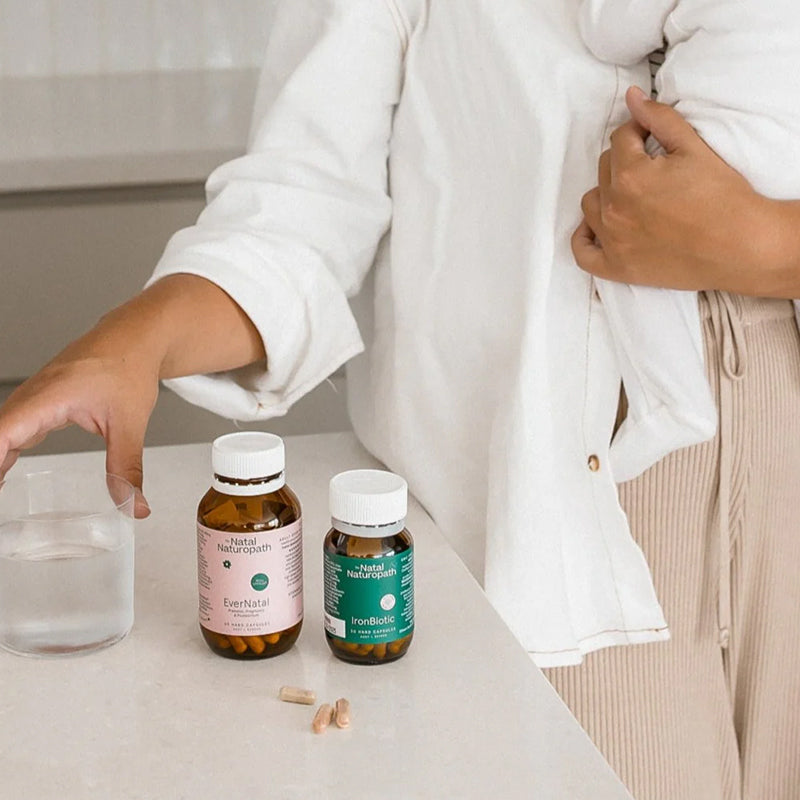

For many parents of young neurodiverse children, getting herbs or supplements into their child can feel like a daily battle.
It isn't always about being "fussy" or refusing to cooperate. Children with autism, ADHD and other forms of neurodivergence can experience taste, smell, texture and sensations in their mouth much more intensely than other children. A tiny change in flavour or texture can be enough for a child to completely reject something they previously accepted.
Some children also find swallowing tablets difficult, dislike unfamiliar flavours, or become anxious when their normal routine is changed.
The good news is that there are many ways to make taking supplements and herbs easier — and sometimes a little creativity can make all the difference.
First: Find out what your child is actually objecting to
Before trying to hide a supplement in food, consider what your child is reacting to.
Is it:
- The taste?
- The smell?
- The texture?
- The size of the tablet?
- The sensation of swallowing?
- The colour?
- The temperature?
- The packaging?
- The routine of having to take something?
- Fear of choking?
- Previous experience of feeling unwell after taking medicine?
Understanding the sensory barrier can help you choose a strategy that is much more likely to work.
For example, a child who hates bitter flavours may tolerate a small amount of supplement mixed into a strongly flavoured food. A child who dislikes unexpected textures may do much better with a liquid or powder that is completely smooth.
Start with tiny amounts
If your child is extremely sensitive to taste, introducing a full dose into a large portion of food can backfire. Alternatively give 1/4 the dose to begin with and work up to a full dose slowly.
Instead, consider using a very small amount of food or drink to deliver the supplement, provided the product can safely be taken this way. Or smaller dose of supplement/herb.
This has two advantages:
- You know your child has consumed the entire dose.
- If they reject it, you haven't wasted an entire meal or drink, or wasted expensive supplements.
Once they become comfortable with the taste, you may be able to gradually increase the amount.
Try different delivery vehicles
One of the simplest approaches is to experiment with foods your child already accepts.
Depending on the particular supplement or medicine, possibilities may include:
Yoghurt
A small spoonful of yoghurt can work well for powders or liquids that are compatible with dairy.
Greek yoghurt or flavoured yoghurt may help mask bitter flavours.
Apple puree
Apple puree or stewed apple can be useful because it has a naturally sweet flavour and smooth texture.
Smoothies
For children who already enjoy smoothies, a small smoothie can provide an easy delivery method.
Try using familiar ingredients rather than creating a completely new flavour combination.
Try a novelty straw or a special cup, its better to use one with a lid and straw as sometimes the smell can be off putting, putting a lid on the sup alleviates this problem.
Nut or seed butter
For children who tolerate nuts or seeds, a small amount of smooth nut or seed butter can help disguise certain powders.
Jam, honey, or maple syrup
For children over 12 months, a small amount of honey can sometimes help mask an unpleasant taste.
Some supplements can also be mixed into a small amount of syrup or another sweet food.
However, this isn't appropriate for every product, and adding supplements to very sugary foods isn't necessarily ideal as a regular strategy, but is acceptable if nothing else is working! its more important to get the nutrient that they lack!
Custard or pudding
A familiar dessert can sometimes be easier for a sensory-sensitive child to accept than a drink.
Cold can sometimes make a difference
Temperature can influence how strongly a flavour is perceived.
Some children find a supplement much easier to tolerate when mixed into something cold.
A chilled smoothie, yoghurt or puree may therefore be preferable to a warm food.
NOTE: never cook the supplements, they lose their effectiveness.
Consider liquid, powder, capsule or chewable forms
Sometimes the problem isn't the supplement itself — it's the form it's being given in.
If a child struggles, let your naturopath know, they may be able to let you know whether another formulation is available.
Teach swallowing gradually
If your child is old enough, learning to swallow tablets can be a useful long-term skill.
Don't necessarily begin with medication.
Some children can practise using tiny pieces of food or specialised pill-swallowing training techniques, gradually increasing the size as they become comfortable.
This should be approached gently and without pressure.
A child who becomes frightened about swallowing may develop an even stronger aversion.
Make it part of the routine
Many neurodiverse children respond well to predictable routines.
Rather than repeatedly asking:
"Are you ready to take your medicine?"
you could create a consistent sequence:
Breakfast → supplement → favourite activity
or
Brush teeth → medicine → story
Visual schedules can be particularly useful for children who respond well to visual information.
A simple picture sequence might show:
🪥 Brush teeth
🥣 Breakfast
💊 Medicine
🎮 Favourite activity
The goal is to make taking the supplement predictable rather than surprising.
Give your child some control
Children can be more cooperative when they have some choice.
Instead of:
"You have to take this now."
try offering two acceptable options:
"Would you like to take it in yoghurt or apple puree?"
or:
The medicine itself isn't optional if it is something medically necessary, but the child can often have a choice about how they take it.
This can reduce power struggles.
Use a favourite "chaser"
Some children tolerate an unpleasant taste if they know they can immediately follow it with something they enjoy.
Don't contaminate favourite foods
This is an important one.
If your child has a very limited diet, be careful about secretly putting medicine or supplements into their most trusted foods.
If they discover that their favourite yoghurt, milk or snack contains something unpleasant, they may stop eating that food altogether.
For a child with a restricted diet, this can create a much bigger problem than the original supplement.
If possible, use a neutral or less important food for mixing.
Sometimes transparency works better than hiding it
Although hiding a supplement can be useful for some children, other children become distressed when they discover something has been hidden in their food.
For these children, honesty and predictability may work better.
You might say:
"This doesn't taste very nice, but we're going to take it and then you can have your favourite drink."
For older children, you can explain why they are taking it in simple language.
Giving children an age-appropriate understanding of what is happening can help them develop independence over time.
Use positive reinforcement
Taking medicine doesn't have to become a negative experience.
You might use a simple reward system such as:
Take medicine → earn a sticker
After collecting a certain number of stickers, the child can choose a preferred activity.
Rewards don't have to be food. They might include:
- Choosing the bedtime story
- Extra play time
- Choosing the family game
- A favourite activity
- Time with Mum or Dad
- Choosing the music in the car
The aim isn't to bribe the child. It's to create a positive association with a difficult task.
Avoid turning it into a battle
Perhaps the most important advice is to avoid creating a daily confrontation around supplements and medicines.
If your child becomes highly distressed, stop and reassess.
Ask yourself:
rather than:
Sensory sensitivities, anxiety, demand avoidance, oral-motor difficulties and previous negative experiences can all play a role.
A calm, predictable approach is often more successful than repeated pressure.
A note about herbs and supplements
Remember to always tell your naturopath if you're child has to start any form of medication, as there may be interactions with herbs or supplements that your naturopath can inform you of.