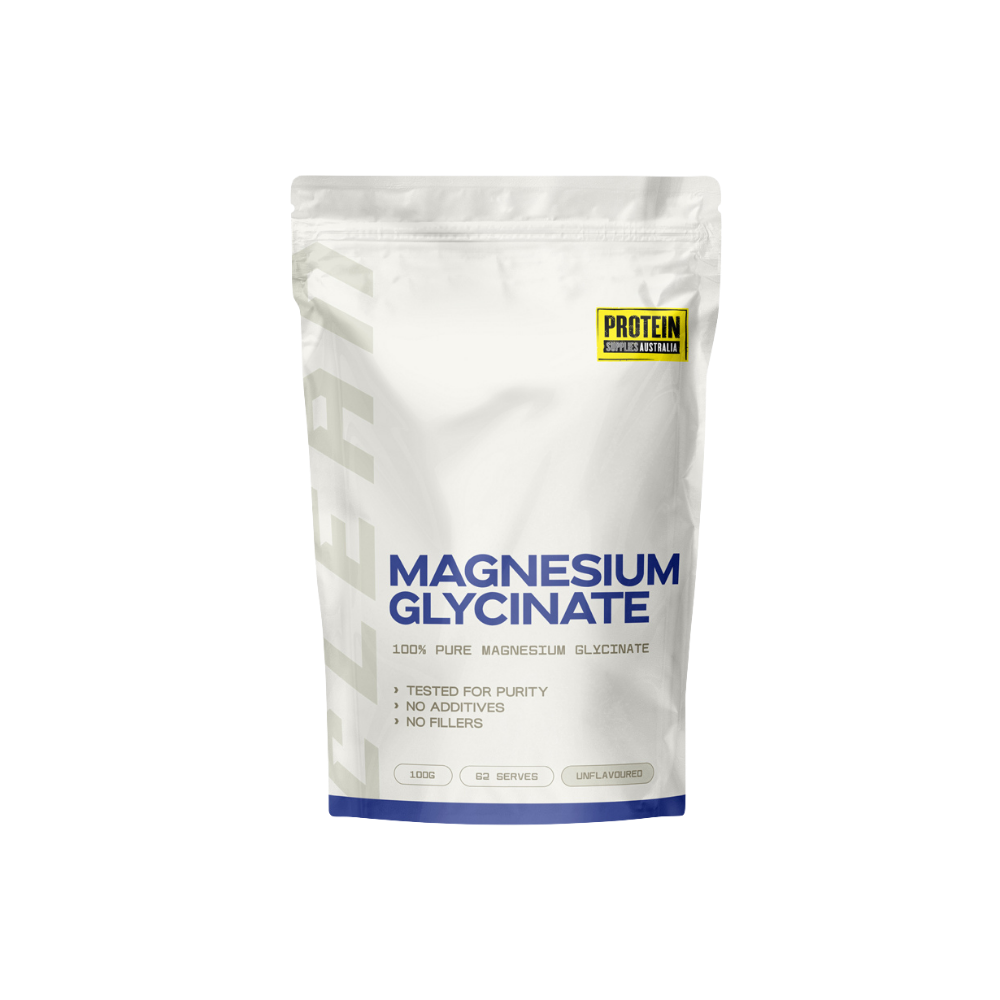

Glycinate, citrate, oxide, malate, sprays: what the different types of magnesium actually are, and how to read the label so you know what you're buying.
The main difference between magnesium glycinate and citrate is what the magnesium is paired with. Glycinate uses glycine, an amino acid. Citrate uses citric acid. Citrate has more research behind it, and small studies show it’s absorbed better than magnesium oxide. Glycinate has very little, so the idea that it’s better absorbed or gentler on your stomach isn’t proven yet. Glycine itself is popular for sleep, but those studies tested glycine on its own, not magnesium glycinate.
If you've stood in front of the magnesium shelf feeling a bit lost, you're not alone. Glycinate and citrate are just two of the types of magnesium out there, alongside oxide, malate and topical sprays. Below, we walk through each one, clearly. Then we show you how to read a magnesium label, so you can compare products by what's inside rather than the name on the front of the pack.
Magnesium glycinate vs citrate is a question our Naturopaths and Homeopaths hear often, in clinic in Liverpool, Sydney and online across Australia.
Not sure where to start?
Key takeaways
- Magnesium in a supplement is always paired with something else. That partner is the "form".
- Citrate has more research in people than glycinate or malate.
- Glycinate is popular, but the claims that it's gentler or better absorbed haven't been properly tested.
- There's no good evidence that magnesium sprays or flakes get through your skin.
- On the label, the "equivalent to magnesium" figure tells you how much magnesium you're actually getting.
- Nutritional support does not replace medical diagnosis, treatment or advice.

First, what is a "form" of magnesium?
Magnesium doesn’t go into a supplement on its own. It’s always paired with something else, and that partner gives the form its name: glycinate, citrate, oxide, malate, threonate and so on.
The pairing matters for two reasons. It changes how much actual magnesium is in each capsule or scoop. And it can change how well your body takes that magnesium in.
According to the NIH Office of Dietary Supplements, forms that dissolve well in liquid tend to be absorbed better, and small studies have found citrate is absorbed better than oxide.
You’ll also see “chelated” on some labels. That describes how the magnesium is bonded rather than being another form, and we explain it below.
That’s about as far as the research goes. Some of the most popular forms have barely been studied in people at all.
Magnesium glycinate
Glycinate is magnesium paired with glycine, an amino acid. You might also see it called bisglycinate or diglycinate. They’re the same.
Online, it has a reputation as the gentle, well-absorbed option. But honestly, the research isn’t there yet.
There’s very little research on glycinate in people, so we can’t say whether it’s absorbed better or easier on your stomach than other forms.
That doesn’t make it a bad choice. It just means the claims you see online are running ahead of the evidence.
In small trials, people took 3 g of glycine on its own before bed, and some reported better sleep quality. Several of those trials had 15 people or fewer, and none tested magnesium glycinate. They can’t tell us whether this form helps with sleep.
Chelated magnesium describes how it’s bonded
“Chelated” or “chelate” isn’t another form. It means the magnesium is held by two bonds to a single molecule, often an amino acid such as glycine. Glycinate is the best-known chelated form, but citrate is a chelate too.
Some brands present chelation as proof of better absorption. The evidence is mixed: some chelated minerals are absorbed better, but not all. One small 1994 study found glycinate was absorbed better than oxide, but in people who’d had part of their small intestine removed. Their absorption was already impaired, so it doesn’t tell us how the two compare in healthy people.
Either way, the form name still tells you the partner, and the “equivalent to magnesium” figure still tells you how much magnesium you’re getting.
Magnesium citrate
Citrate is magnesium paired with citric acid, the same acid you'll find in lemons.
It's one of the better-studied forms. In a 2003 trial, 46 healthy adults took citrate, oxide or another form every day for two months. Citrate raised blood magnesium levels the most.
It’s important to remember, these studies measured how much magnesium got into the body. They didn't look at its effect on sleep, stress or muscles, so they can't say that magnesium citrate directly helped with any of those.

Magnesium glycinate vs citrate: so which is better?
On what we know today, citrate has more evidence behind it. Glycinate might turn out to be just as good, but it hasn't been properly studied.
In practice, how much actual magnesium is in the product matters just as much as the form. That's where the label comes in and we’re going to show you how to read a label to know what you’re getting from your supplement.
Magnesium oxide
Oxide is one of the most common forms you’ll find in supplements.
It’s also one of the forms your body absorbs less well. Small studies have found the body takes in less magnesium from oxide than from citrate and several other forms.
Oxide isn’t always named on the front of the pack, so it’s worth checking the ingredients.
Magnesium malate
Malate is magnesium paired with malic acid, which is found naturally in apples.
It’s a popular choice, but there’s little research comparing it with other forms in people. So there’s no reliable evidence that it’s absorbed better or worse than citrate or glycinate.
The good news is you can judge it the same way as any other form: by reading the label to check how much actual magnesium is in each serve.
Magnesium threonate
Threonate is magnesium paired with threonic acid. It’s often sold under the brand name Magtein, and it’s getting a lot of attention at the moment.
The main claim is that it reaches the brain better than other forms, but that idea comes from animal research. In people, there are a few small trials of the Magtein ingredient. A 2025 trial of 100 adults ran for six weeks. It found improvements in some thinking measures and in self-reported sleep, but not in sleep measured objectively. They’re interesting results, but the trials are small and short and test one branded ingredient. We can’t yet say how threonate compares with citrate or glycinate.
Topical magnesium
Topical magnesium means the sprays, oils, lotions and bath flakes designed to be absorbed through your skin. They’re an easy, no-pill option, which is a big part of their appeal.
The research on how much magnesium gets through the skin is still limited. A 2017 review looked at the studies so far and found they weren’t strong enough to show that it does.
So for now, topical magnesium can’t be compared directly with a tablet or powder. If you’re adding up how much magnesium you’re getting each day, the forms you take by mouth are the ones you can measure.
How to read a magnesium label
If you've searched for the best magnesium supplement in Australia, the label is the part we'd focus on. Here’s what to look out for when reading a label:
- Check the "equivalent to magnesium" figure. Australian labels list the form first, then how much actual magnesium it gives you. It looks something like this: "magnesium citrate, equivalent to magnesium 145.8 mg". That second number is the one to compare. As the NIH explains, it's the amount of magnesium itself, not the weight of the whole ingredient.
- Find every form of magnesium listed in the ingredients. Lots of products mix two or more forms. It’s worth knowing which ones you’re getting, especially oxide, which small studies have found the body absorbs less well than some other forms.
- Confirm how much you'd take in a day. Multiply the magnesium per serve by the number of serves in the directions. Then compare it with the upper level in Australia's Nutrient Reference Values: 350 mg a day from supplements for adults and children 9 and over. It's lower for younger children: 110 mg for ages 4 to 8, and 65 mg for ages 1 to 3. The limit is there because too much magnesium from supplements can cause diarrhoea.
- Make sure there’s an AUST L number. This means the product is listed with the TGA. It's worth knowing what that does and doesn't mean: the TGA doesn't check whether AUST L products work before they go on sale but products marked AUST L(A) have had their health claims assessed.
- Watch out for the other ingredients. Look at fillers, flavours, sweeteners and colours, especially in powders and chewables.
When to talk to a Naturopath
Magnesium is easy to buy, but it isn’t one-size-fits-all. A Naturopath or Homeopath can look at your history, diet and any test results, and help you work out whether you need it and which form suits you.
It’s especially worth checking with us first if you:
- Are pregnant or breastfeeding, or are buying for a child
- Have ongoing diarrhoea, or a bowel condition like Crohn’s disease or coeliac disease
- Take regular medicines, such as diuretics, long-term reflux medicine, bisphosphonates for your bones or certain antibiotics. Magnesium can make some of these harder for your body to absorb, so timing matters.
- Have kidney problems. Your kidneys clear extra magnesium, so it can build up if they aren’t working well.
If you have kidney problems or take prescription medicines, please check with your GP or prescriber too. We’re happy to work alongside them.
Testing isn’t simple either. A standard blood test doesn’t show how much magnesium is stored in your body, so we’ll look at your history as well.
Find the right support
Not sure which magnesium, if any, is right for you? Start with a chat. Book a free 15-minute discovery call with our team. We see people in clinic in Liverpool, Sydney and online across Australia.
Book a free 15-minute discovery call
This article is for general education only. It isn't medical advice and doesn't replace advice from your GP or a qualified health practitioner who knows your history.
Magnesium FAQs
Answers to common questions about magnesium
Is magnesium glycinate better than magnesium citrate?
Not that we know of yet. Citrate has more research in people, and small studies show it’s absorbed better than magnesium oxide. Glycinate has very little research, so the claims that it’s gentler or better absorbed haven’t been tested. It may turn out to be just as good. Either way, check how much actual magnesium you’re getting.
What does "equivalent to magnesium" mean on a label?
It's the amount of actual magnesium in each serve. Supplements list the whole ingredient first, such as magnesium citrate, which includes the part the magnesium is paired with. The "equivalent to magnesium" figure tells you how much of that is magnesium itself. It's the number to use when you're comparing products or adding up your daily total.
How much magnesium do I need each day?
Australia's Nutrient Reference Values recommend 400 mg a day for men aged 19 to 30 and 420 mg for men 31 and over. For women, it's 310 mg from 19 to 30 and 320 mg from 31. That's from food and supplements together. There's a separate upper level of 350 mg a day for magnesium from supplements alone.
Does magnesium spray work through the skin?
There's not a lot of research to show that it does. A 2017 review looked at the research on magnesium sprays, flakes and bath salts and found that claims about magnesium getting in through the skin aren't backed by science. Taking magnesium by mouth is the way that's been properly studied.
What does AUST L mean on a magnesium supplement?
AUST L means the product is listed with the TGA, Australia's regulator for medicines and supplements. It's a useful thing to check, but the TGA doesn't assess whether AUST L products work before they're sold. Products marked AUST L(A) have had their health claims assessed, and AUST R medicines are assessed for whether they work.
Can magnesium upset your stomach?
It can, at higher doses. The NIH notes that large amounts of magnesium from supplements or medicines often cause diarrhoea, sometimes with nausea and cramps. It lists carbonate, chloride, gluconate and oxide as the forms most often reported to do this. That's also why Australia's upper level for supplements is 350 mg a day for adults.
Continue reading
More from the Words of Nourishment journal